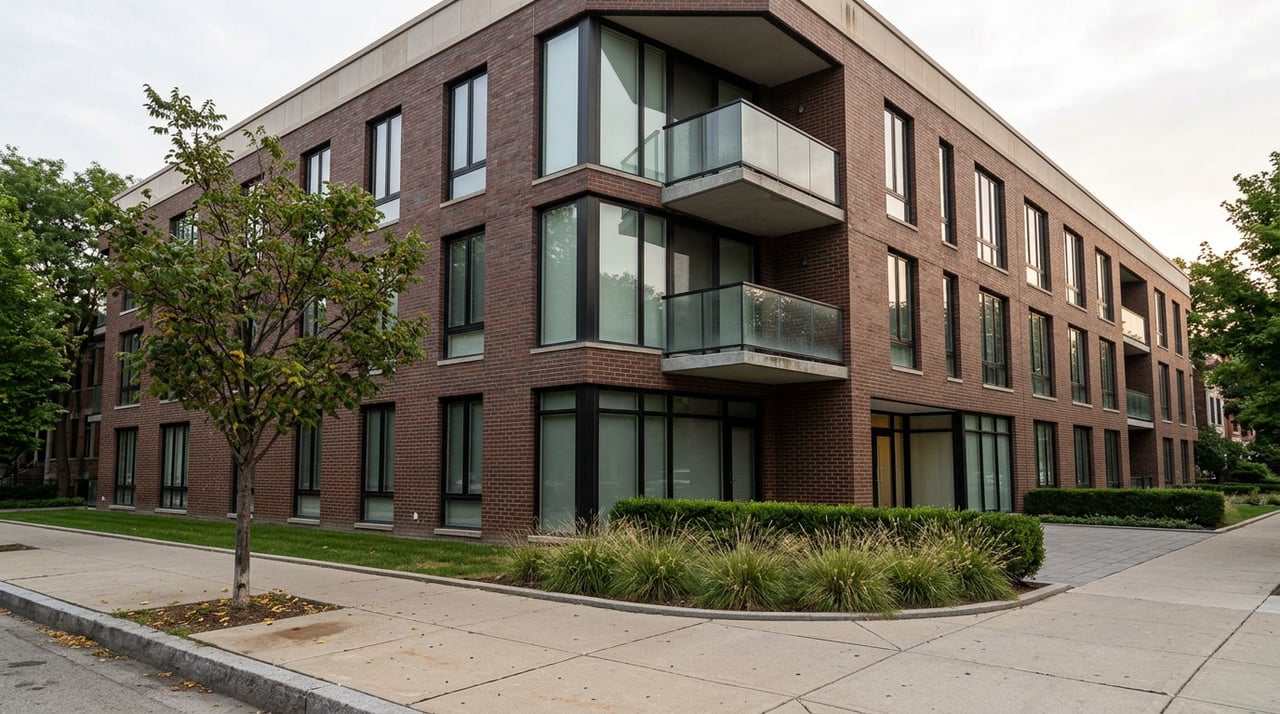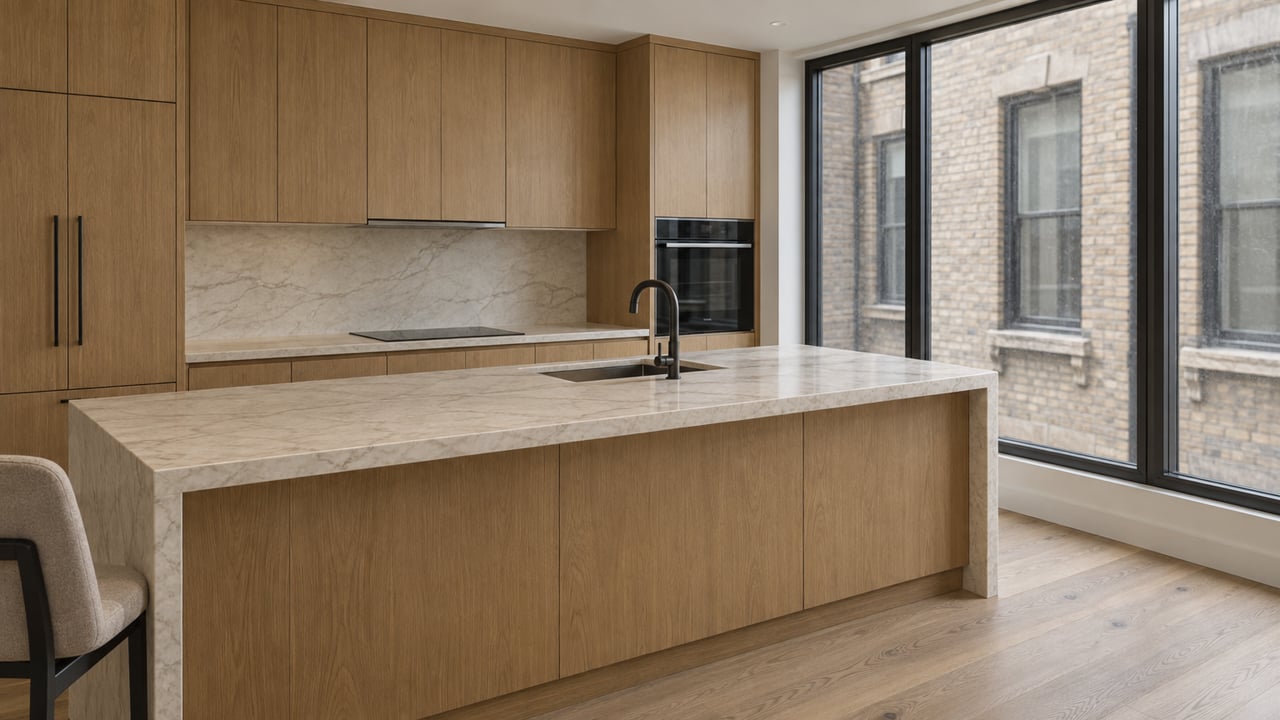
Two units inside the same Lake Shore Drive tower can sell for wildly different prices, and the gap has less to do with square footage than with what kind of loan a buyer can get for the address. At 1200 North Lake Shore Drive, a prewar high-rise designed by Marshall and Fox in 1912, one one-bedroom listed this year at $599,000 while another unit in the same building closed at $280,000. Same lobby, same doorman, same view corridor toward the lake. The spread is not a pricing mystery. It is what happens when a neighborhood's most historic buildings carry financing rules that most buyers have never had to think about, and in 2026 those rules are shifting in a direction nobody predicted.
Gold Coast is one of the few Chicago neighborhoods with a real cooperative housing market, a holdover from the prewar building boom along the lakefront. A handful of these buildings, like 999 North Lake Shore Drive, a 27-unit beaux-arts tower also designed by Benjamin Marshall, still operate as true co-ops. One recent sale there, a unit identified as 2B, closed at $1.6 million, a reminder that co-op does not automatically mean bargain. But at the entry level, co-op one-bedrooms in the neighborhood have been advertised as low as $250,000, well under the $350,000 to $500,000 range typical for entry-level condos in comparable established buildings. That gap is real, and buyers who only look at the sticker price tend to read it as free equity sitting on the table.
It isn't free. It's a deposit on patience.
Why the co-op number looks so much lower
In a co-op, you are not buying real property. You are buying shares in a corporation that owns the building, along with a proprietary lease to occupy a specific unit. That structure changes everything downstream. Lenders who write share loans are typically local portfolio lenders, not the national banks that dominate condo financing, and there are fewer of them. Boards routinely cap financing at 50 to 70 percent of the purchase price, which means a buyer needs meaningfully more cash up front than a comparable condo purchase would require. Add a board application, a document review, and often an in-person interview, subject to fair housing rules, and the timeline from accepted offer to keys in hand stretches well beyond a standard condo closing.
None of that shows up in a listing price. It shows up later, in the size of the buyer pool willing to sit through it. A smaller buyer pool means a co-op has to price itself to attract the buyers who can and will clear that bar, which is exactly why the entry point sits below the condo entry point for a similar unit. The discount is the market's way of pricing illiquidity and friction, not a signal that the building itself is worth less.
Monthly costs tell a similar story from a different angle. Co-op maintenance fees often bundle building operations, staff, insurance, reserves, and a share of the corporation's property taxes into one number, sometimes including an underlying building mortgage. Condo owners at 1200 North Lake Shore Drive currently pay HOA fees ranging from roughly $1,486 to $3,949 a month, on top of property taxes billed separately by Cook County. Comparing a co-op maintenance fee to a condo assessment without adjusting for what each one includes is one of the more common ways buyers misread a Gold Coast listing.
| Co-op (e.g. 999 N. Lake Shore Dr.) | Condo (e.g. 1200 N. Lake Shore Dr.) | |
|---|---|---|
| What you own | Shares plus a proprietary lease | A deed to the unit |
| Typical financing | Share loan, 50-70% LTV, portfolio lenders | Conventional mortgage, wider lender pool |
| Buyer screening | Board application, financial review, interview | Association rules, but outright rejection is rare |
| Monthly fee often includes | Building taxes, staff, reserves, sometimes utilities | Common-area maintenance, reserves, insurance |
| Typical Gold Coast entry point | As low as roughly $250K for a one-bedroom | Roughly $350K to $500K for a one-bedroom |
The rule that's closing the gap from the other side
Until this year, the assumption for a buyer choosing between a co-op and a condo in this neighborhood was straightforward: condos are the easier, faster, more liquid path, and the co-op discount is the price you pay to skip that ease. That assumption got more complicated on August 3, 2026, when new condominium lending guidelines from Fannie Mae and Freddie Mac took effect nationwide.
The change eliminates the Limited Review process that lenders had used for years to fast-track mortgages on established condo buildings. Before August 3, roughly 40 percent of condo mortgage applications nationally moved through that streamlined pathway, according to CNBC's reporting on the rule change. Under the new standard, nearly every condo association now goes through Full Review, meaning a lender has to examine the building's budget, reserve study, board minutes, insurance coverage, history of special assessments, and physical condition before a loan can be sold to Fannie Mae or Freddie Mac. That is a level of scrutiny condo buyers rarely encountered before this year, and it looks a lot more like what co-op boards have always required of an applicant, just aimed at the building's finances instead of the buyer's.
A second change compounds it. Starting January 4, 2027, associations must fund their reserves at 15 percent of the annual budget to remain eligible for this financing, up from the current 10 percent floor. Buildings that have been running lean on reserves, which describes a fair number of prewar Gold Coast condo associations carrying original mechanical systems and facades, now have roughly a year to close that gap or risk losing access to conventional financing altogether.
The Community Associations Institute surveyed more than 700 board members and managers this year and found that 42 percent were unsure whether their own building would qualify for federally backed financing under the new rules, and 40 percent acknowledged characteristics that could trigger ineligibility. Among boards already ruled ineligible, 64 percent said the denial had already hurt sales or property values in their building.
None of this touches co-ops directly, since co-op share loans were never routed through Fannie Mae or Freddie Mac in the first place. Which means the traditional financing advantage that condos held over co-ops in this neighborhood, the assumption that a condo purchase is simply the path of least resistance, is narrowing from the condo side. A buyer choosing between a well-run co-op and a condo association with thin reserves in 2026 is not choosing between easy and hard anymore. They may be choosing between two different kinds of hard, for different reasons.
What this actually changes for a Gold Coast buyer
The practical shift is in what a buyer needs to ask, and when.
For a co-op purchase, the questions have not changed: confirm the building's underlying mortgage if one exists, ask for two to three years of financial statements, and budget four to eight weeks for board package preparation and interviews on top of a standard closing timeline. Co-op boards are typically upfront about this process because they have been running it for decades.
For a condo purchase, the new question is one most buyers never had to ask before this year: is this specific building's reserve study current, and is the association funding at the highest level that study recommends. A building that passed easily under the old Limited Review standard is not guaranteed to pass Full Review, and a building sitting at a 10 or 11 percent reserve contribution today has limited runway before the January 2027 deadline forces a decision between raising assessments or risking financing eligibility. Asking to see the reserve study and the association's most recent budget before writing an offer is no longer a formality. It is the condo equivalent of asking a co-op board about its approval timeline.
Neither structure is the safer bet in the abstract. What has changed is that the safety used to run entirely in the condo's favor, and now it depends on the specific building on both sides of that comparison.
A few direct questions
Are Gold Coast co-ops still cheaper than condos in 2026? At the entry level, yes. One-bedroom co-ops have been listed as low as roughly $250,000 against a $350,000 to $500,000 range for comparable condos. That gap reflects financing friction and a smaller buyer pool, not a difference in building quality.
Do the new Fannie Mae and Freddie Mac rules apply to co-ops? No. The August 2026 changes apply to conventional condo mortgages sold to Fannie Mae and Freddie Mac. Co-op share loans are underwritten separately by portfolio lenders and are not affected by this rule change directly.
How do I find out if a specific condo building's reserves meet the new standard? Ask the association for its most recent reserve study and current funding percentage before making an offer. A study completed or updated within the last three years, funded at its highest recommended level, is what lenders will look for under the new Full Review requirement.
If you are weighing a Gold Coast co-op against a condo, or trying to figure out what a specific building's reserve position means for your financing timeline, Carol Collins can walk through the building-level numbers with you before you write an offer.