If you want a premium price for your West Loop loft, the details matter more than ever. Buyers in this market respond to clean presentation, strong photography, and a layout that feels both stylish and easy to live in. The good news is that you usually do not need a major renovation to get there. With the right prep plan, you can highlight the character that makes West Loop lofts desirable and launch with confidence. Let’s dive in.
Why West Loop loft prep matters
West Loop stands out for its converted warehouses and factory buildings, now reimagined as homes and offices. It is also known as a highly walkable neighborhood just west of downtown Chicago, which keeps it on many buyers’ short lists.
Current market data supports a thoughtful selling strategy. Redfin’s West Loop condo data shows 119 condos for sale, a median listing price near $497,000, and about 34 days on market. Its broader West Loop housing data shows a median sale price of $499,000, up 4.0% year over year, with 48.5 days on market.
Chicago-wide trends also point to opportunity for sellers who present well. Illinois REALTORS reported the City of Chicago median sales price at $409,200 in March 2026, up 7.7% from a year earlier, while inventory was down 28.8% and days on market were down 13.5%. In a market with tighter inventory, polished homes can stand out quickly.
Start with the loft identity
A West Loop loft does not win by looking generic. Buyers are often drawn to the industrial character, scale, and openness that define this housing style.
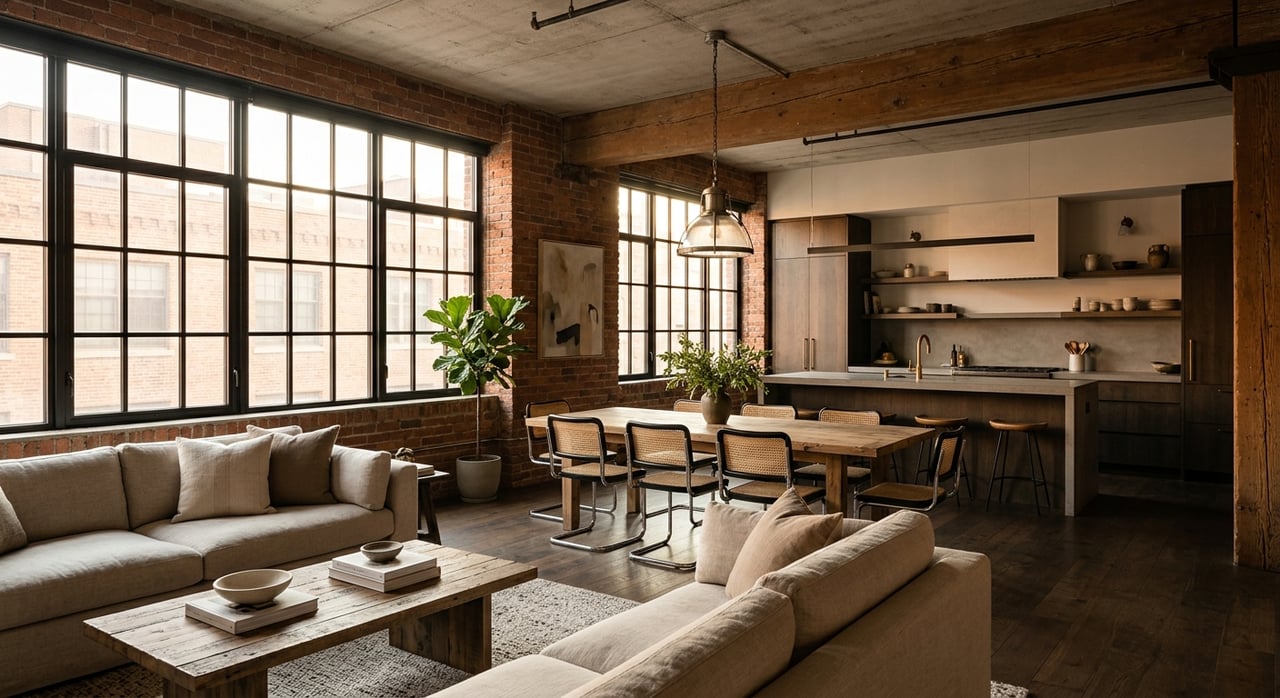
That means your prep should protect the features that already carry value. Exposed brick, beams, high ceilings, large windows, and open sightlines should feel intentional and easy to appreciate. Instead of covering up the loft’s personality, refine it.
Chicago trend data offers a useful clue here. Redfin’s spring 2026 home-trends data shows brick exterior, white cabinetry, tile backsplash, and open concept living among the city’s higher sale-to-list ratio features. For loft sellers, that supports a simple strategy: keep the industrial envelope, but make the finishes feel bright, fresh, and move-in ready.
Focus on presentation, not major remodeling
If you are aiming for a premium sale, it is easy to assume you need a full update. In many cases, the smarter move is focused cosmetic prep that improves how the home looks in person and online.
The National Association of REALTORS defines staging as presenting a property to highlight its strengths and help buyers envision themselves living there. In its 2025 staging report, 83% of buyers’ agents said staging made it easier for buyers to visualize the property as a future home. More than a quarter of sellers’ agents also said staged homes received offers that were 1% to 10% higher in dollar value.
That does not mean filling the space with decor. It usually means subtracting distractions, clarifying the layout, and making the loft feel lighter and more functional.
Use a smart cosmetic prep checklist
Before you spend on upgrades, take care of the basics that shape buyer perception right away.
Declutter and depersonalize
Start by removing personal items, collections, and anything that makes surfaces feel busy. In a loft, visual noise spreads fast because the floor plan is open and the camera sees more of the room at once.
Pack away excess items early. Closets should look about half full, and storage areas should feel organized rather than stuffed. Buyers want to see space, not your storage system.
Edit bulky furniture
Large sectionals, oversized chairs, and too many accent pieces can make an open loft feel smaller than it is. Pull back to only the furniture that helps define each zone clearly.
The goal is better flow, not emptiness. Buyers should be able to read where they would place a dining table, where the living area begins, and how they would move through the room.
Refresh paint and finishes
Neutral paint colors such as beige, gray, and soft white remain a safe choice for sale prep. If your walls are scuffed, dark, or highly specific in color, a repaint can quickly brighten the unit.
Small finish updates can also help. Tighten loose hardware, replace anything worn or dated that interrupts the look, and make sure the overall finish palette feels clean and consistent.
Deep clean every visible surface
Cleaning has an outsized payoff. NAR guidance highlights windows, carpets, lighting fixtures, and walls as areas that can make a major difference.
For a West Loop loft, clean windows are especially important because natural light is often one of the property’s strongest assets. Brick, beams, concrete, metal, and wood all look more elevated when the home is spotless.
Define zones in an open layout
One of the biggest challenges in selling a loft is helping buyers understand how to live in a large open room. If the layout feels vague, buyers can see the space as unfinished instead of flexible.
Your staging should solve that problem. Use furniture, rugs, and lighting to create clear living, dining, work, and sleeping zones without crowding the space.
Keep each zone purposeful
Every area should have a clear job. A simple seating arrangement can define the living area, while a properly scaled table can anchor dining. If you have a work nook, show it as a clean and functional workspace.
Avoid adding too many pieces just to fill square footage. In a loft, restraint often reads as luxury.
Preserve the sightlines
Open concept living performs well in Chicago data, so do not block what buyers came to see. Keep major paths open and avoid tall or heavy pieces that interrupt the loft’s volume.
When buyers enter, they should feel the ceiling height, the width of the windows, and the sense of flow right away. That first impression matters.
Prep for photography like a marketing launch
Your loft is going to be judged online before many buyers ever step inside. That is why photo prep deserves as much attention as in-person staging.
NAR notes that the camera magnifies clutter and poor furniture arrangement. It recommends making the home spotless, reducing furniture, creating a focal point, and opening blinds for natural light. It also suggests taking practice photos before the photographer arrives.
Make the camera path easy
Walk through your loft with your phone and view each room as a buyer would see it online. If one corner looks cramped, one counter looks busy, or one shelf feels overloaded, the listing photos will likely amplify it.
This is where small edits matter. A few objects of varying heights can work well on surfaces, but too many accessories quickly become distraction.
Time the shoot to your windows
Window orientation can affect how your loft photographs. Realtor.com’s photography guide recommends shooting north-facing homes between 10 a.m. and 2 p.m., east-facing homes in the morning, south-facing homes in early morning or early to late evening, and west-facing homes in the afternoon into evening.
If your loft has strong sunset light or a private outdoor area, golden hour can also add warmth and depth. The right timing helps your listing feel polished from day one.
Sequence your sale prep 8 to 12 weeks ahead
A premium launch usually starts well before the listing goes live. Zillow notes that many people begin thinking about selling three to four months before they list, and that timing fits the work required to prep a loft properly.
For West Loop sellers, an 8 to 12 week runway is a practical target. That gives you enough time to edit furnishings, complete touch-ups, coordinate staging, and reach the market while the unit is fully camera-ready.
A simple timeline to follow
Here is a useful sequence for a premium sale:
- 8 to 12 weeks out: Walk the property, identify cosmetic issues, plan paint and repairs, and decide what to store or remove.
- 6 to 8 weeks out: Deep clean, complete touch-ups, edit furniture, and begin staging refinements.
- 2 to 4 weeks out: Finalize photography, video, and virtual tour prep.
- Launch week: Make sure the loft is spotless, bright, and consistent across every showing and marketing asset.
This approach aligns with current local conditions. Illinois REALTORS and DePaul’s Institute for Housing Studies projected Chicago condo sales to rise 104.5% from February to May 2026, with condo prices rising 4.5% over the same span.
Choose your launch window carefully
No one can control the market, but you can control your readiness. That matters because timing studies for Chicago point to spring as a strong listing season, even if the exact sweet spot varies.
Realtor.com’s 2025 Best Time To Sell report identified March 23 to March 30 as Chicago’s best listing window, while Zillow’s 2026 analysis points to the second half of May and estimates a 2.8% premium for a typical Chicago home. Those findings are not identical, but they point in the same general direction.
For a West Loop loft, the lesson is simple. Do not rush to market half-prepared just to hit an early date. A fully merchandised, professionally marketed loft is usually better positioned than one that launches before it is ready.
Market the loft like a premium product
Once the prep work is done, execution matters. NAR notes that MLS exposure typically provides the broadest reach and that the first open house the weekend after a listing goes live can help maximize exposure.
This is where a marketing-first listing strategy can create separation. Professional photography, video tours, and virtual tours help buyers understand the volume, finishes, and layout that make loft living attractive. In a design-driven neighborhood like West Loop, high-quality visuals are not optional.
If the loft is vacant, virtual staging may help buyers understand room use, as long as material alterations are disclosed. The goal is always the same: help buyers picture the property clearly and confidently.
The premium-sale takeaway
The strongest West Loop loft sales usually are not built on dramatic remodeling. They are built on disciplined presentation, clean design choices, and a launch plan that lets the property’s character do the work.
In today’s market, buyers still respond to well-prepared homes. If you preserve the loft identity, simplify the layout, maximize light, and go live only when the home is truly ready, you put yourself in a stronger position to attract serious attention and negotiate from strength.
If you are thinking about selling a West Loop loft and want a tailored prep and marketing plan, Carol Collins can help you position your home for a polished, premium launch.
FAQs
How should you stage a West Loop loft for sale?
- Focus on decluttering, removing bulky furniture, defining clear living zones, and highlighting original loft features like brick, beams, ceiling height, and large windows.
Do you need to renovate a West Loop loft before listing it?
- Usually, no. The research supports cosmetic prep such as cleaning, neutral paint, light finish updates, and strategic staging rather than major remodeling.
When is the best time to list a West Loop loft?
- Chicago timing studies point to spring as a strong season, with one report favoring late March and another favoring the second half of May, so the best move is to be fully ready for that window.
How far in advance should you prepare a Chicago loft for sale?
- A practical timeline is 8 to 12 weeks before launch so you have time for repairs, staging, photography, and final marketing prep.
What features help a Chicago loft stand out to buyers?
- Current Chicago data suggests buyers respond well to open concept living, brick character, white cabinetry, tile backsplash, and a bright, clean presentation.